November 12, 2026
When planning a roof replacement or addressing a winter leak, most homeowners direct their attention to surface materials like architectural shingles, standing-seam metal panels, or clay tiles. While the visible layer defines your home's exterior aesthetic, the ultimate protection of your building envelope relies heavily on what lies directly beneath those shingles. Modern residential roofing utilizes advanced underlayment systems engineered to combat severe seasonal weather. At the forefront of this defense strategy is the ice shield, an elastomeric waterproof barrier designed to stop moisture infiltration where conventional materials fail.
Understanding the mechanics of roof leaks requires looking beyond basic gravity. Rain does not always fall straight down, and winter weather creates thermal imbalances across roof decking that force water to travel backward, sideways, and upward against the slope. To prevent catastrophic leaks, structural rot, and interior water damage, hiring an experienced local roofing contractor ensures that vulnerable roof transitions are reinforced with self-adhering membranes. According to This Old House, an ice and water shield is a self-adhering membrane installed along roof perimeters and valleys that must extend at least three feet inside the interior wall line to shield roof sheathing from wind-driven rain and ice dams.
Understanding the Destructive Mechanics of Winter Ice Dams
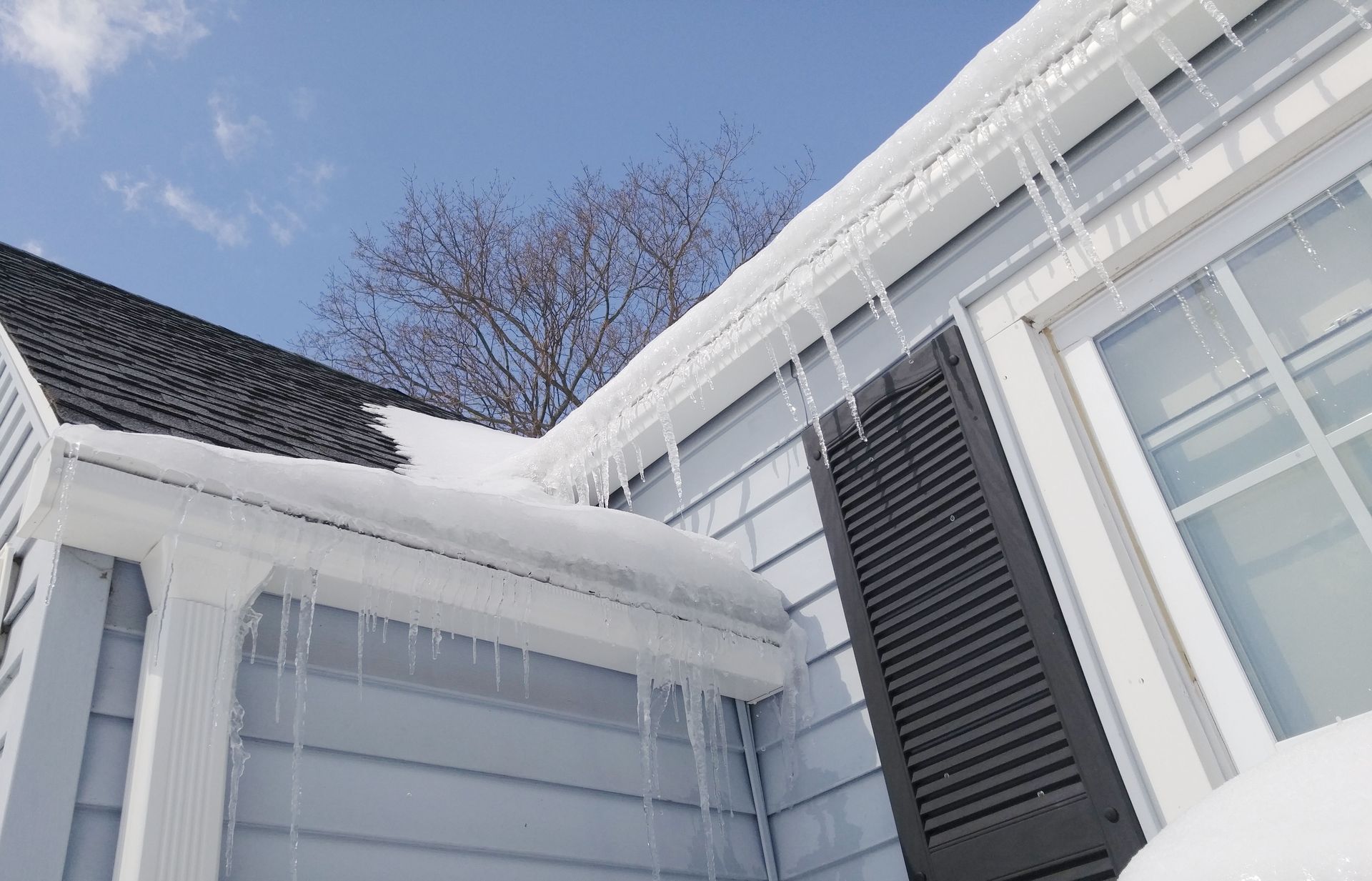
To appreciate why protective membranes are indispensable, one must first examine the physics behind ice dam formation. Ice dams occur during prolonged periods of sub-freezing outdoor temperatures paired with moderate to heavy snow accumulation on the roof surface. Heat escaping from a home’s conditioned living spaces rises into the attic cavity, elevating the temperature of the upper roof sheathing above thirty-two degrees Fahrenheit.
As the underside of the upper roof warms, the snow layer in contact with the shingles melts. This liquid runoff travels downward along the pitch of the roof toward the eaves and overhangs. However, because eaves extend past the exterior walls of the house, they remain unheated and mirror the freezing outdoor air temperature. When the meltwater reaches these cold perimeter edges, it refreezes instantly, building a solid wall of ice along the gutters and fascia.
As more snow melts from the center of the roof, the pooled runoff cannot drain off the edge. Blocked by the growing ridge of ice, water backs up behind the dam, creating a standing pool that submerges lower shingle courses. Standard asphalt shingles, wood shakes, and traditional roofing felts are designed strictly as water-shedding components, not waterproof membranes; they rely entirely on gravity to pull water downward over overlapping courses. When backed-up water rises past shingle laps, it slips beneath the fasteners and penetrates raw wood decking. An experienced local roofing contractor installs specialized ice shields in these vulnerable perimeter zones, forming an impermeable, self-sealing barrier that stops standing water from reaching the sheathing.
Examining the Self-Sealing Chemistry of Modified Bitumen
Unlike standard synthetic roofing underlayment or traditional asphalt-saturated organic felt paper, an ice shield is not mechanically fastened with loose staples or plastic cap nails. Instead, it is manufactured from polymer-modified bitumen—a rubberized asphalt formulation backed with a strong adhesive layer and protected by a peel-off backing.
When applied directly to clean plywood or oriented strand board (OSB) roof sheathing, the membrane adheres aggressively to the wood substrate. As the sun warms the roof, the rubberized compounds activate, creating a continuous, watertight bond across the deck.
One of the most remarkable properties of modified bitumen is its ability to self-seal around mechanical fasteners. During shingle installation, thousands of galvanized roofing nails penetrate the underlayment. Standard felt paper tears and stretches around these punctures, creating tiny voids where capillary action can draw water through the deck. In contrast, the viscous elastomeric compounds inside an ice shield flow tightly around penetrating nail shanks, gripping the metal and sealing the hole permanently. When you hire a seasoned local roofing contractor, they prioritize this material specifically to eliminate fastener leaks in high-risk zones.
Identifying the High-Risk Installation Zones on the Roof Deck
While applying an ice shield across an entire roof deck provides maximum waterproofing, it is often cost-prohibitive for standard residential projects. Instead, building codes and manufacturer specifications identify high-stress areas where water accumulation, thermal movement, and turbulent runoff are most acute.
Eaves and overhangs serve as ground zero for winter ice dams where cold edges allow water to pool. Code mandates and best practices require installing the membrane from the extreme outer edge of the roof deck upward past the warm interior wall line to halt backed-up moisture. In valleys where two sloping roof planes intersect, runoff funnels at high volume and velocity, creating severe drainage stress that demands heavy-duty protection. A reputable local roofing contractor always lines the entire length of these channels with self-adhesive barriers before laying shingles.
Vertical intersections, including dormer sidewalls, chimney bases, and skylight curbs, represent additional vulnerability points where wind-blown rain can slip behind flashing joints. Wrapping these critical junctures with flexible membrane creates a seamless, watertight envelope. Low-pitch sections, such as porch roofs and sunroom additions, also require extensive membrane coverage because slower drainage makes them especially vulnerable to capillary water movement during sustained downpours.
Mitigating the Substantial Costs of Hidden Water Damage
Investing in quality underlayment might seem like an invisible expense, but the downstream costs of skipping this step are severe. When water breaches roof sheathing, damage spreads quietly throughout the structure long before visible droplets stain interior ceilings.
Moisture trapped between insulation batts and roof decking accelerates dry rot in rafters and trusses, degrading the home's structural framing. Wet attic insulation compresses, losing its thermal resistance (R-value), which causes heating bills to spike and exacerbates the very attic heat loss that generates ice dams in the first place. Furthermore, persistent dampness creates an ideal incubator for toxic black mold within attic rafters, which easily infiltrates interior living spaces through HVAC ducts and ceiling penetrations.
Repairing rotted fascia boards, rebuilding compromised roof decking, and remediating mold contamination costs significantly more than the initial price of quality underlayment materials. Working with an honest local roofing contractor ensures your investment includes proper defense layers, sparing you the financial burden of extensive interior drywall, ceiling, and structural repairs after a single harsh winter.
Combining Water Barriers With Balanced Attic Airflow
While ice shields offer exceptional protection against water penetration, they are designed to function as the final line of defense, not the sole solution to home heat loss. A comprehensive approach to roof health pairs waterproofing membranes with balanced attic ventilation and proper thermal insulation.
Rafter vents (baffles), soffit intake vents, and ridge exhaust vents work in harmony to maintain uniform attic temperatures. By continually sweeping cold exterior air through the underside of the roof deck, a balanced ventilation system prevents the warm air pockets that melt rooftop snow prematurely. When an experienced local roofing contractor evaluates your roof replacement, they will inspect your attic ventilation alongside underlayment requirements, ensuring that your home resists ice dam formation at every structural level.
Your roof is a dynamic barrier that must withstand scorching summer sun, driving spring downpours, and freezing winter snowdrifts. While surface shingles provide the first layer of defense and define your home's curbside character, the underlying protective membranes do the heavy lifting when severe weather strikes. By sealing nail penetrations, forming an impermeable shield along eaves and valleys, and halting the destructive migration of trapped water, modified bitumen membranes protect your family's investment against the unexpected.
Partnering with a knowledgeable local roofing contractor guarantees that high-stress roof areas receive the precise materials and professional installation methods necessary to endure severe winters and torrential storms. Contact Pro Contractors Co LLC today to schedule a thorough roof inspection and protect your home with industry-leading installation standards.